



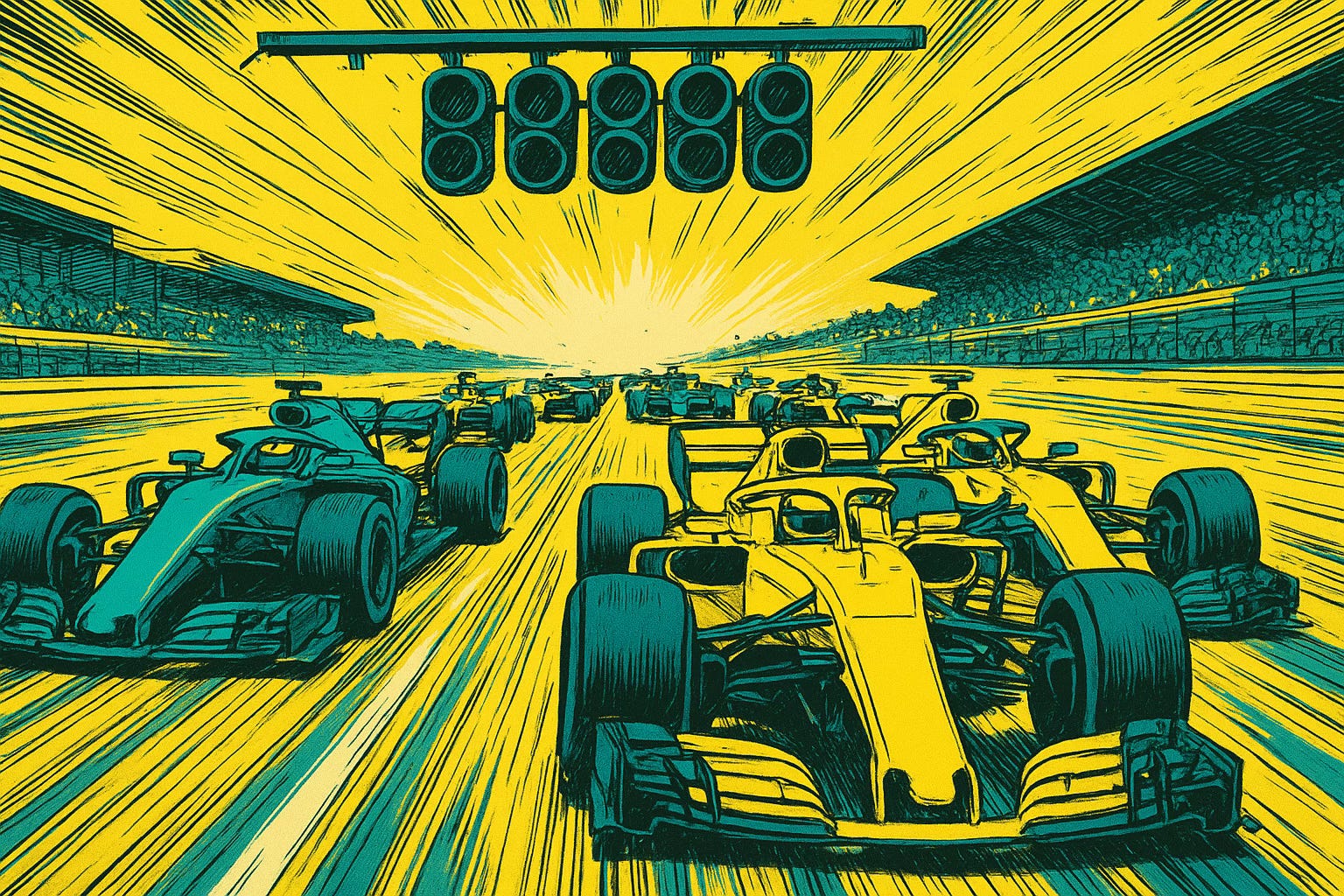
As a massive F1 fan, I was glued to the TV over the weekend for the final Grand Prix of the season. Three potential world champions went head-to-head (to head?) in one of the most thrilling finales of the modern era. 58 high speed laps of racing lay ahead, full of twists and turns, but in all likelihood, whoever led going into the first corner was likely to win the race. And of course, it’s not just the drivers’ lightning fast reaction times that contribute to a fast start – weeks of hard work planning the right strategy, communicating that to the drivers, and aligning on how to attack that first bend all contributed to who ultimately came out on top.
Back to reality (I think my chances of becoming an F1 driver are probably gone now), and I’m fresh back from kicking off a brand new team with a brand new set of goals to go after. The start of every new team, project, or initiative is one of the most exciting periods for any product manager. Everything is on the table and nothing seems impossible. The roadmap is full of possibility rather than compromise, and teams tend to be full of ideas on how we can make it a reality. What’s more, we’re meeting new people and forming new relationships. The potential feels untapped.
Over the years, I’ve learned that what you do in this opening phase determines far more than your first few months of delivery. It sets the emotional, cultural, strategic, and psychological foundations for everything that follows. Investing time, energy and thought into these early stages can have an exponential effect on the performance of your team over the coming months and beyond.
Start With Energy & Trust
Strong team morale can help you overcome even the most difficult challenges, but it isn’t something that happens by chance. It requires deliberate effort and putting in that effort from the outset can set the tone for working brilliantly together from this point onwards.
Our ultimate goal should be to foster teams that feel:
Safe to speak up
Excited about what they’re building
Clear on how they can contribute
Respected for what they bring
In the early stages of a new team or initiative, it’s natural for people to be figuring out how decisions are made, whether their opinion is valued, or how each of their colleagues work. Therefore it can be really helpful to lean into these themes during kickoff sessions. Consider:
Sessions designed to foster psychological safety
Introductions which eschew the traditional (and, let’s be honest, awkward) activities such as “tell us something interesting about yourself” and lean more towards what makes each individual tick, what’s their preferred communication style, what are their working hours, etc
Overviews of each individual’s passions and strengths, and what they expect you to come to them for
This is even more critical in the post-pandemic/hybrid world we all now live in. We can no longer rely on these bonds forming organically – we must be intentional and deliberate about it.
Develop a Shared Understanding
High performing teams are rarely content with simply delivering against a set of requirements that are handed to them. The most beautiful Miro board or thorough PRD will never be a substitute for a shared understanding of why we’re doing what we’re doing, how it drives value for customers, and what success looks like for us as a team.
It can be helpful to either share or co-create any of the following (non-exhaustive) list:
The business’ strategy and any product strategy derived from it
The overall vision for the product
Any KPIs or, even better, OKRs associated with the product so that the whole team can understand what outcomes we’re really trying to achieve
A unified team with a passion to innovate and deliver against those strategic goals can emerge through discussing, debating, and iterating on those key artefacts. It’s built when assumptions and complexity are surfaced, not shied away from, and when team members feel free to ask “stupid” questions. Gathering the whole team around these concepts from the start allows for smart trade-offs to be made throughout the product life cycle.
At the start of a project, your real job isn’t to define requirements - it’s to create alignment around intent. What problem are we truly solving? Who are we solving it for? What does success feel like? How will we measure it?
When teams share meaning and purpose, not just deliverables, speed and quality of delivery go up.
The Product Manager as a Cultural Architect
We often think of product managers as prioritisers, problem solvers, or champions of user value. But at the start of any new initiative in particular, you are creating something less tangible, but just as valuable: you are architecting a product culture that will be at the heart of every decision and action going forward.
Before we get into roadmaps, backlogs, or ceremonies, we first need to design the environment in which product thinking can thrive. We’re fostering an environment which encourages:
A focus on solving the actual problems users are facing
Customer data being an insight that every team member craves – not just the PM
Experimentation aimed at validating assumptions
Genuine belief in, and alignment to the overarching strategy – rather than just paying lip service to it
Differences in perspective, because they help us achieve better product outcomes
And, crucially, we’re doing all of this before any features are discussed. Before the chequered flag is waved. Before the lights even go out to signal the start of the race.
It is possible to foster this culture later in the product life cycle, and of course a strong team culture and product-alignment is never a “set and forget activity”, but you will likely find yourself part of a more motivated and performant team if you can embed this culture from the off.
In Conclusion
Intentionally designing a strong product culture based on safety, trust and shared alignment, will give you the best possible foundation to deliver the long-term value we are all so passionate about.
Therefore it’s important not to rush it. Take the time that’s required, remove any blockers to your team’s talents and passion, and take pride in the amazing things this enables you to achieve.
Love the F1 analogy here. The point about intentionally building psycological safety before diving into features is something alot of teams skip, and then wonder why alignment falls apart later. If the cultural foundation isn't set early, every downstream decision becomes way harder to navigate. Creating that shared understanding upfront prevents technical debt from becoming cultural debt.