


You know the meeting...
The one that ends cleanly. Action items assigned, next steps clear, everyone nodding. These days, an AI-generated summary hits your inbox within about three minutes. It’s crisp, accurate, all the key points captured. Boom.
But somehow, despite all of that, nothing actually changes.
A concern surfaces in a Teams message that never came up in the room. An email lands the next morning that slightly repositions what was agreed. Someone messages you: “I’m not sure that’s actually decided yet.”
Sound familiar? I’d be surprised if it didn’t.
Here’s the thing though; we all know this happens. The question is why we keep acting like the meeting is the only moment that matters.
The meeting is not where decisions get made
I’m not trying to be flippant. Of course, some decisions get made in meetings. However, most meetings aren’t where decisions happen. They’re where decisions get announced.
Or performed.
Or deliberately left vague because naming them would force a confrontation nobody was ready for. Yup, I had at least one of those meetings yesterday too!
Think about the last big decision in your org. Where did it actually form?
In most cases, it was one of these:
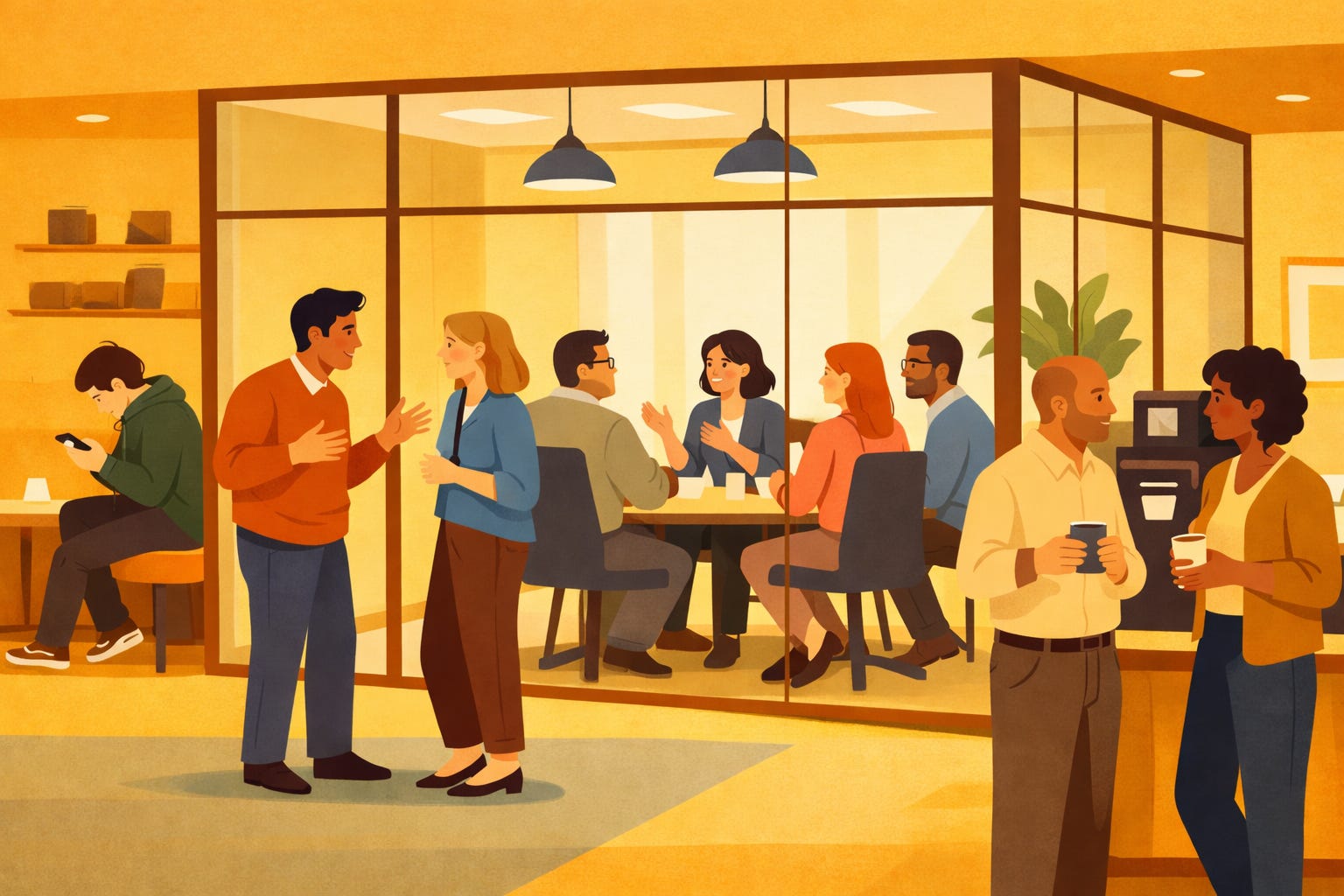
In a pre-meeting that you may or may not have been invited to. This is the conversation before the conversation. Someone did the rounds. Concerns were surfaced privately. Framing was tested. By the time everyone joined the call, the outcome was already in motion.
In a conversation after the meeting, which was the real verdict on whether something actually landed. “That went well.” or “I’m not sure that resonated.” or “We should probably revisit that.” This is where alignment either consolidates or quietly falls apart.
In a follow-up email that slightly repositions what was agreed. Usually not intentionally political, just someone trying to capture nuance. But whoever writes it shapes the record. Don’t underestimate this one.
Or in a Slack thread where language gets tested before it goes anywhere official, and where the real temperature of a decision becomes visible if you’re paying attention.
So while the AI summary your team received after the meeting was useful, it can only capture what was said, not what was meant. It can’t tell you whose hesitation went unspoken, or whether the nodding heads in the room actually believed what they were agreeing to.
Why this makes some PMs invisible and others indispensable
There are two types of PM when it comes to meetings (and honestly, I’ve been both at different points in my career 😅).
Type 1 treats the meeting as the unit of work. They prepare for it, show up, perform well and move on. Often really articulate and confident in the room. And frequently confused about why their ideas keep not sticking. This was me earlier in my career.
Type 2 understands that the meeting is just one moment in a longer social process. They’re thinking about who needs to feel heard before the room fills. Or the one that needs quiet reassurance that the decision is aligned with their goals. They’re following up with the right person afterwards. They know that the conversation in the corridor after the session is often where the real decision gets made.
Here’s an important reframe that in my view helps you move from being a type 1 to a type 2. Type 2 isn’t ‘political’, or ‘playing the game’ but simply being cognizant of how decisions actually work.
That’s a meaningful distinction. Because a lot of the behaviour I’m describing gets labelled as “playing politics” which gives it a slightly grubby feeling. But it isn’t. It’s reading the system correctly, which is an important skill.
Three things worth changing from tomorrow
I don’t want to just leave you with the observation so here are a few practical shifts:
Prepare differently.
Before an important meeting, the question isn’t just “how do I make my case?” It’s “who in that room hasn’t been heard yet, and what would make this decision actually hold once we’re done?” Those are different questions, and the second one is usually more valuable.
Don’t mistake silence for agreement.
The people who say least in the meeting are often the ones whose buy-in matters most; and the most likely to share their actual view somewhere else, later, when it’s harder to address. If someone has been quiet, follow up.
Treat the follow-up as part of the decision.
What you say, to whom, and in what order after the meeting is where alignment either consolidates or quietly dissolves. This is not admin. This is the work.
The meeting was never really the point
The most important decisions forming in your organisation right now are probably not happening in any scheduled session.
They’re forming in the pre-meeting that happened this morning. In the quick note sent after last week’s planning session. In the follow-up someone is drafting right now.
The PMs who understand this don’t necessarily talk more or perform better in meetings. They just invest their attention differently: in the spaces around the formal moments, where the real work is still happening.
Next time you leave a significant meeting, try asking a different question. Not “did that go well?” but “where is this decision still unfinished?”